
Opal Types
The ‘N Scale’ to describe body tone represents a combination of opaqueness & darkness of precious opal on a scale of N1 (completely opaque/black) to N9 (completely translucent), and is assessed by viewing the gem from above i.e. ‘top down’ or by viewing the ‘face’ of the gem, and should not be confused with the ‘play of colour’.
The opal must have gem colour on the face – potch is simply potch and has no relevance on this grading scale.
Body tone should never be determined by observing the back of the gem as not all black opals have black or dark potch underneath the colour, and one would likely be only visualising opaque potch.
- N1 to N4 describes black opal
- N5, N6 describes dark opal
- N7, N8 describes light opal, white opal and sometimes crystal opal which is semi translucent
- N9 describes crystal opal which is wholly translucent

Black Opal - N1 to N4 on the Body Tone Scale
Lightning Ridge is the only place in the world* that produces commercially viable quantities of stable gem quality black opal, making it the rarest and most valuable opal on earth.
Black opal may have any primary colour, and the scarcest therefore most sought after is ‘red on black’ (including combinations of red/orange/gold or multicolour with red as the primary component).

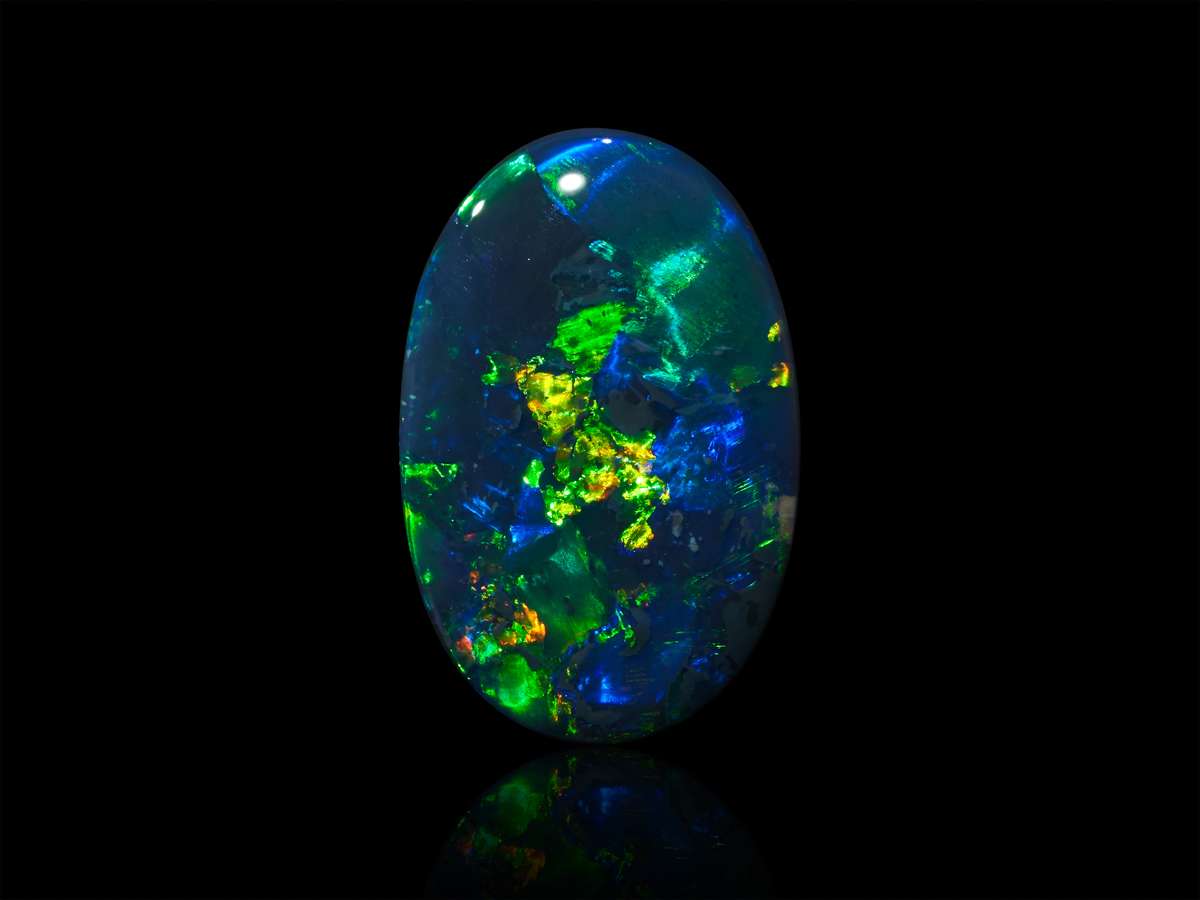


The body tone of black opal significantly enhances the rich and intense colours of the gemstone. This is due to the naturally forming ‘potch’ underneath the gem colour bar, which provides a natural opaque backing that prevents light from travelling all the way through the stone.
Black crystal opal refers to a body tone that initially looks opaque in the N1 – N4 range, but upon placing a light source behind the opal, one can just see through the stone because there is no potch present.
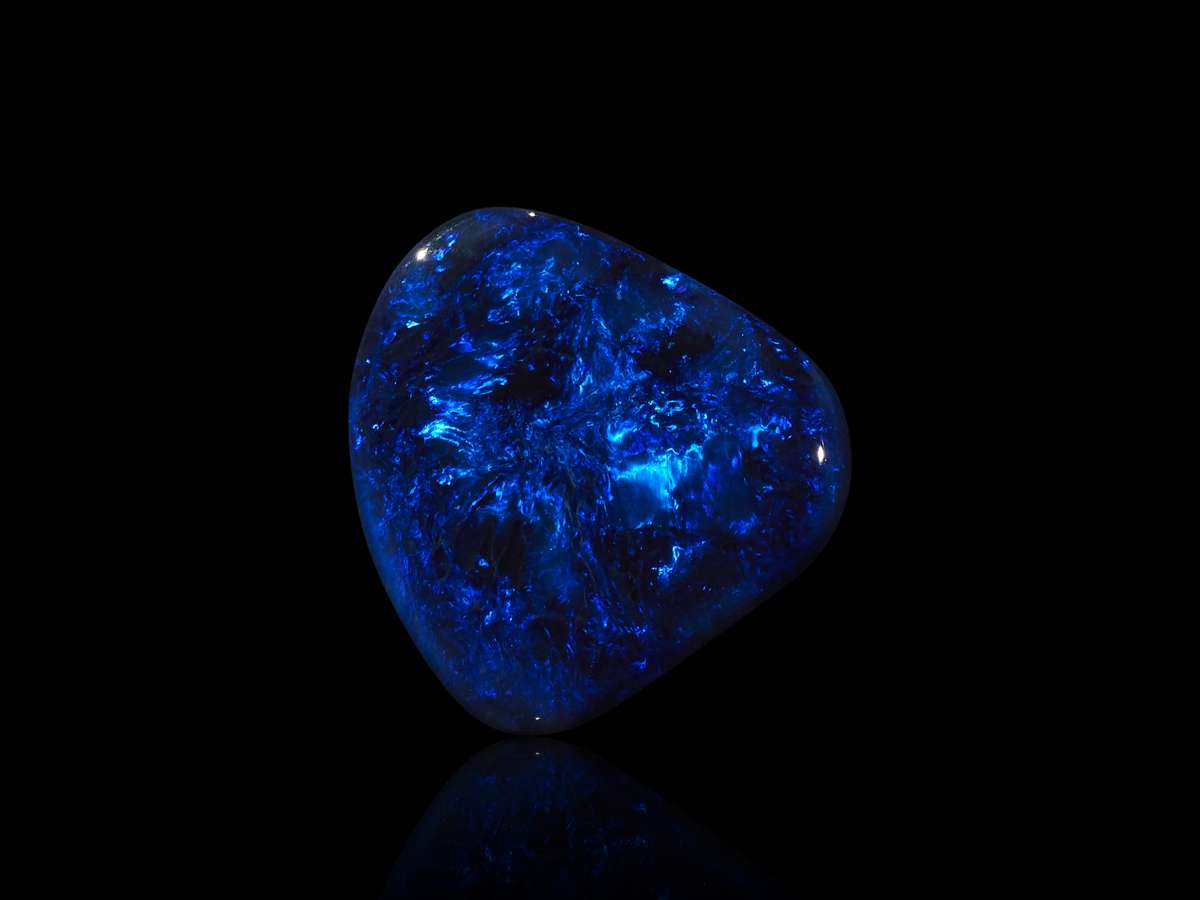
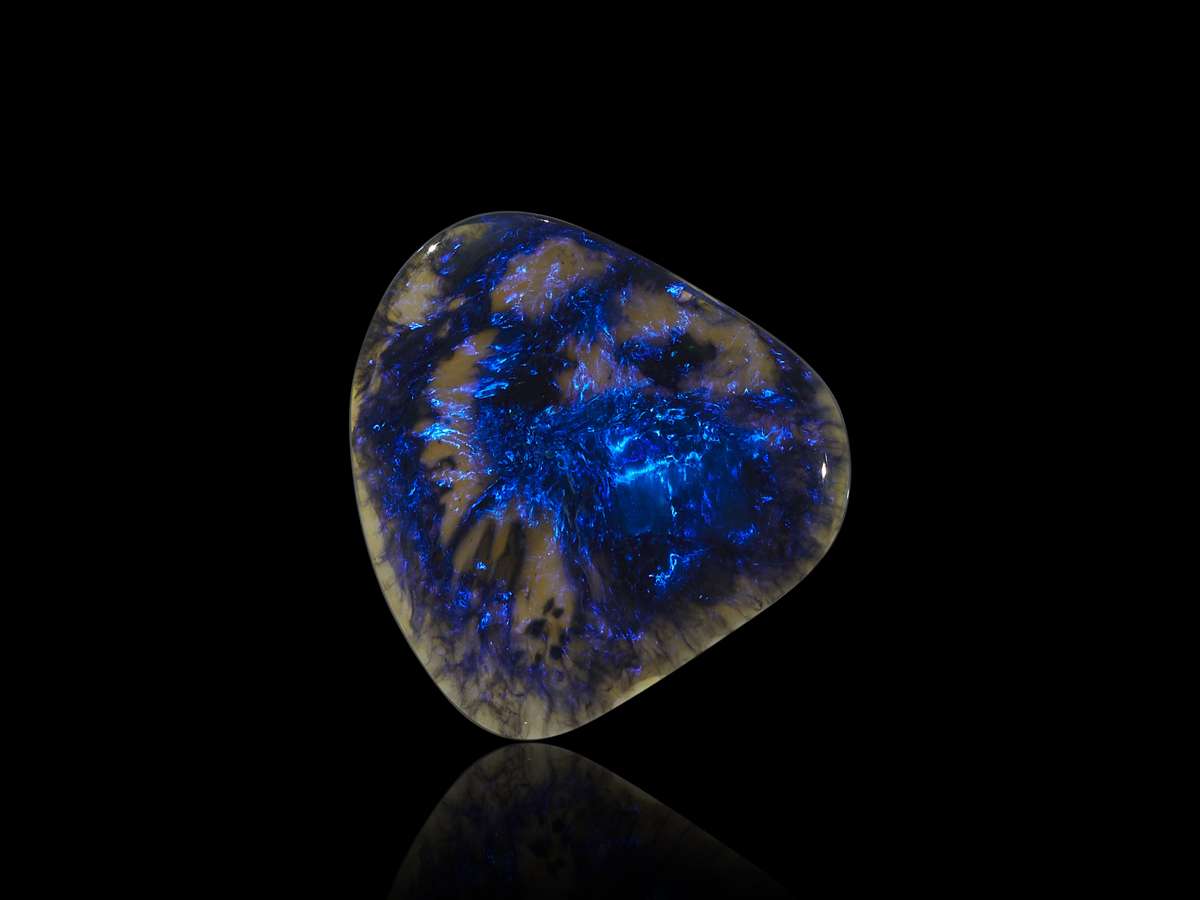
*Small quantities of black opal are found in Indonesia and Ethiopia, however this type of opal can be unstable with a tendency to crack and/or change body tone, colour and brightness due to its absorbency properties.
There is also a small field in Coober Pedy SA that has produced the occasional black opal and also in Mintabie SA, however this material is not as gem quality as Lightning Ridge Black Opal, hence is not valued at the same price per carat.
Dark Opal - N5, N6 on the Body Tone Scale
Dark opal or ‘Semi Black’ as sometimes it is called, is slightly greyer in body tone – the potch on the back is lighter but not white. The transition between N4 and N5 is always tricky and requires a trained eye with years of experience in order to not inadvertently make a subjective assessment.


Light & White Opal - N7, N8 on the Body Tone Scale


Light opal displays gem colours and has a light or white body tone rather than a darker body tone of black opal. Light or white opal often but not always has light or white potch underneath the precious colour. White opal is mainly sourced from the South Australian opal fields, however, Lighting Ridge also produces gem quality white opal.
Crystal Opal - N9 on the Body Tone Scale
Crystal opal is precious opal that is translucent – if you hold it up to the light, some light will pass through. It does not have a ‘crystal system’ structure like diamond, tourmaline, ruby, sapphire or quartz – it’s called ‘crystal’ simply because it resembles a transparent crystal – therefore it is a descriptive term only. Crystal opal generally does not have potch on the back of the stone, hence it’s ‘transparency’.

Top gem crystal opals are often polished on both sides of the gem to display their incredible three-dimensional colour play.
Crystal opal exhibits a beautiful luminosity.


Crystal Opal - N9 on the Body Tone Scale

Honey opal is so named because it resembles honey. Opal is such a diverse gemstone that many of the colloquial and gemmological descriptors are used to describe what it looks like and this is especially utilised when dealing with patterns.
Honey potch is very common and is called so when it displays no play of colour at all.
Honey opal looks just like honey potch, but often exhibits bright small segments of colour within the opal as it is rotated, called ‘sunflash’.
FUN FACT – Sometimes honey opal can be deceptive. In bright light, colour might not be seen except for shards of sunflash, but move it into the shadows and sometimes it will glow purple.
How to Distinguish Black, Light and Crystal Opals – Quick Reference
Black Opal
- Appearance: Black opals are the epitome of opulent beauty, featuring a dark, mysterious body tone that can range from deep charcoal to jet black.
- Transparency: Typically opaque, these opals sometimes exhibit slight translucence, adding depth to their enigmatic allure.
- Colour Play: The dark backdrop of a black opal enhances its play of colour through a process called constructive interference. The diffraction of light within the tightly packed silica spheres creates a striking and dramatic contrast, resulting in vibrant, fiery hues that display unparalleled brilliance and intensity.
Light Opal
- Appearance: Light opals possess an ethereal, milky white or pale-coloured body tone, exuding a delicate and refined charm.
- Transparency: These opals are typically opaque, sometimes revealing a subtle translucence that adds to their gentle allure.
- Colour Play: The vibrant play of colours in light opals results from the diffraction of light by silica spheres within the opal’s microstructure. The colours dance gracefully across the light background, creating a mesmerizing and elegant display.
Crystal Opal
- Appearance: Crystal opals are renowned for their captivating clarity, ranging from translucent to transparent, akin to shimmering, liquid crystal and sometimes a three-dimensional depth as if looking into an undersea world!
- Transparency: These opals are prized for their high transparency, which allows light to pass through and interact with the silica spheres within. This interaction enhances their inner brilliance.
- Colour Play: The vivid play of colours within a crystal opal appears to float and radiate due to the light passing through the transparent structure. The precise arrangement and uniformity of the silica spheres amplify the gemstone’s luminous effect, captivating the beholder with a stunning display of spectral colours.
In essence, the luxurious distinction among black, light and crystal opals lies in their base colour and transparency, each type offering a unique and exquisite play of colour. This enchanting display of colours is a result of the intricate interaction between light and the opal’s microscopic silica spheres, making each gemstone a marvel of natural science and artistry.
Potch is a vital component when formed naturally and simultaneously with precious opal. When precious opal forms homogeneously on top of a layer of potch, the opal base becomes opaque therefore concentrating all light emanating from the stone via the dome. This creates a depth, contrast, brilliance and patterns not seen anywhere else on earth outside of Lightning Ridge.
Boulder Opal
Whereas opal mined in Mintabie, Coober Pedy, Andamooka, White Cliffs and Lightning Ridge is described as being “homogenous” i.e. the combinations of colour and potch are formed naturally and are both the same chemical formula – boulder opal most generally is presented as a vein of opal adhered during formation to the ironstone that backs it.
Boulder gem opal forms in cavities within a brown-coloured, iron-rich rock called ironstone. Boulder opal is mined in Western Queensland, which is the only place in the world where it is found. The opal is generally crystal opal (no potch) and the ironstone provides a natural opaque backing to the opal thus amplifying its play of colour, pattern and vibrance. Think of boulder opal as a veneer of opal formed within the host ironstone (Winton and Opalton), and sometimes as infill in cracks and voids displaying stunning patterns (Koroit and Quilpie).
The distinctions are important as “black opal” can only be ascribed to homogenous opal, so a black body tone opal from Queensland must be identified as “black boulder opal”. There is a substantial price difference between these two opal types.


Opal Doublets
Opal doublets consist of a gem crystal opal layer laminated to a dark backing.
A well-crafted doublet opal is highly sought after as it displays the rich colours of a black opal at an affordable price. The backing for doublets can be black/dark potch, glass, obsidian, ironstone and in rare cases plastic.


Once set in jewellery, a doublet is completely indistinguishable from a solid if the setting edge cannot be seen. In a natural solid opal, the line between colour and potch is never even – it will always undulate even if that is minimal. In a doublet, the line is razor sharp because the colour and the backing have been polished on a ‘flat lap’ which provides a perfectly flat base for each material.
Opal Triplets
Opal triplets consist of 3 layers – a fine layer of gem crystal opal sandwiched in-between a layer of dark base material and a transparent cap on top, usually quartz or glass to protect the layer of opal and magnify the colour. The backing for triplets can be black/dark potch, glass, obsidian, ironstone and in rare cases plastic – as for doublets.


Once set in jewellery, a triplet can be easily identified when viewed from the side as the dome will become completely translucent like glass and display no patterns or colour.
